In this episode
- Resale is set to overtake fast fashion within a decade
- How Eskadi searches multiple pre-owned designer sites at once
- Technology that makes shopping pre-loved easier
The Rise of Fashion Resale: Founder of Eskadi, Sarah Helppi
On this episode of Start Scale Succeed, Nicole Higgins, The Buyer and Retail Coach, talks about fashion resale. As a result, you will come away with practical tips for your own product business. So, press play above or read on for the key points.
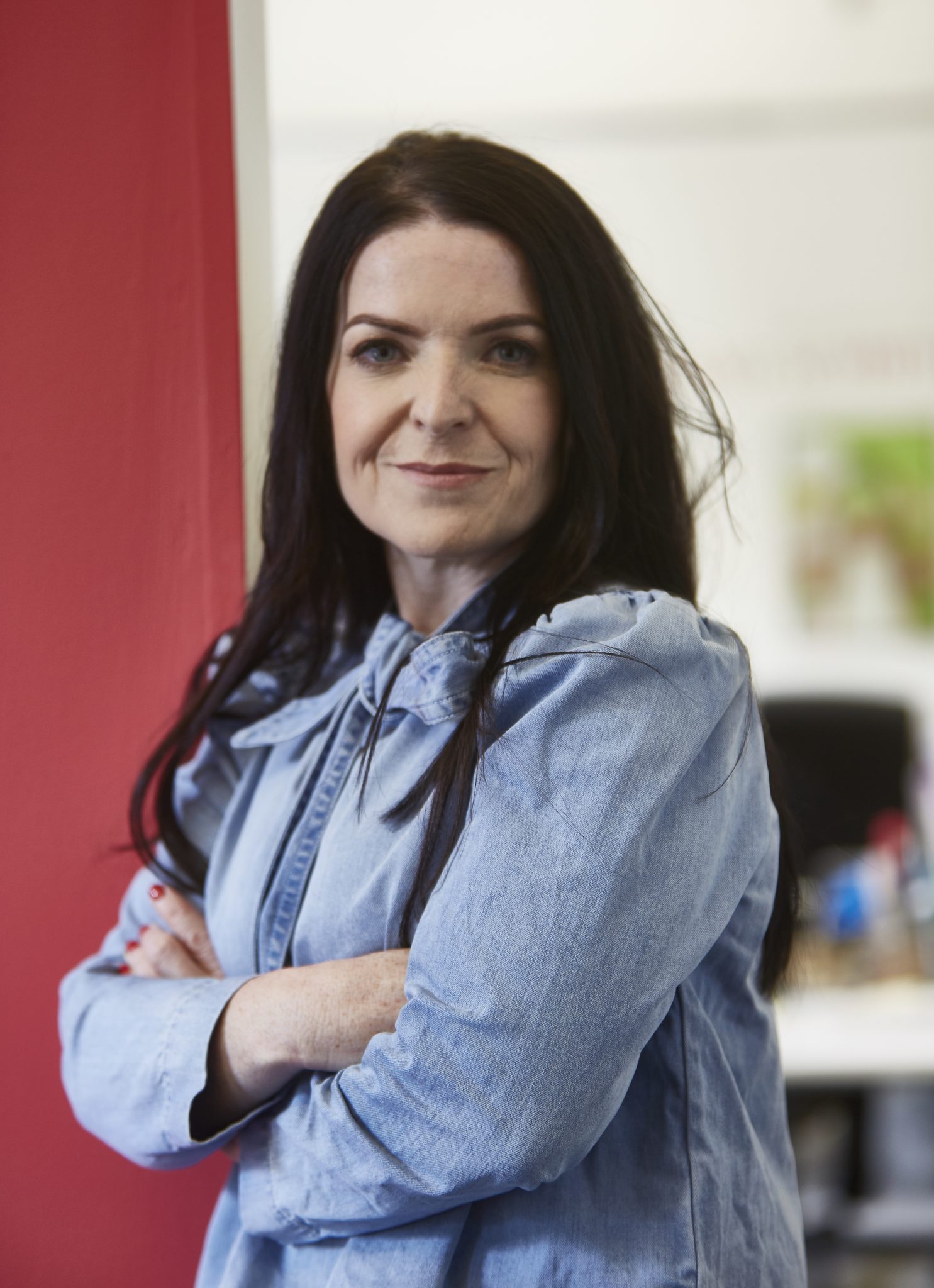
Sarah Helppi is the founder of fashion resale platform Eskadi, which is the largest preloved boutique. 3000 designers from Chanel to Rixo, mid market to super luxury fashion. Sarah joins Nicole on Start Scale Succeed this week to discuss Eskadi’s belief that a business leaves the world a better place than they found it and how Eskadi brings beautiful preloved pieces to more people more often.
As well as finding out more about Sarah and the business, we are also going to talk about resale as a business opportunity
KEY TAKEAWAYS
We chat about fashion resale
Within the next 10 years, resale is going to be a bigger business than fast fashion at about $64 billion.
Eskadi is the only search engine dedicated to pre-owned designer fashion. They offer a technology based solution to the challenges shopping in the pre-owned market today, making it quicker, easier to find that pre-loved item. It allows you to search multiple resale sites at once, compare prices easily across platforms, keep track of items in a single wishlist and save time understanding authentication with an authentication score for each platform.
The younger demographic tend to use resale in the same way other people use fast fashion. They’ll want something to wear once, but don’t want to pay the fast fashion prices. They’re also more likely to recycle their wardrobes more often, selling on resale sites and buying new outfits from them too.
Eskadi works without having payment on their site or holding any stock. This avoids the inevitable issue of buyer seller disputes. For example if something is sold through Ebay, it’s Ebay who deals with the dispute.
BEST MOMENTS
“Even if it’s 2 years old you won’t see someone walking down the street wearing the same thing”
“Rental is great for occasion wear, but if you want to update your wardrobe or find that piece, resale is better”
“The more you can focus on the problem you’re solving and the value you have, the more successful you will be”
VALUABLE RESOURCES
www.thebuyerandretailcoach.com
www.instagram.com/thebuyerandretailcoach
https://www.linkedin.com/in/shelppi/
https://www.instagram.com/search.eskadi/
https://medium.com/@EskadiSarah
https://www.tiktok.com/@search.eskadi (if that’s your thing!)
ABOUT THE GUEST
“Before launching Eskadi, I worked at eBay for 7 years in marketing and finance. Prior to that I spent 3 wild years in the capital markets throughout the 2008 financial crisis, and have an MBA from the Ivey Business School in London, Ontario, Canada.
On the eve of #internationalwomensday I put a digital pen to paper about what it looks and feels like to face fundraising and starting a business when you are a solo parent.
We all know that a mere 2% of VC money goes to female founders and now I’ve seen first hand one reason why: the lifestyle and cash flow of a startup founder is simply not suited to a household on one income, in an expensive city, with small mouths to feed. The stakes are enormous, the risk is huge, the impact of failure unfathomable.
Statistically, amongst split families, it is women who bear most of the child rearing responsibilities and therefore, the challenges in the fundraising path that disadvantage solo parents are hitting a lot more women than men.”
More from episode 36
ABOUT THE HOST
Buying & retail expert Nicole Higgins spent the last 18 years working for companies such as Primark, M&S, Debenhams and Asda, sourcing & developing products from all over the world, building strategies for blue chip businesses, and increasing bottom line sales and profit, adding over £40 million in incremental business to the bottom line.
Nicole now uses that experience and works as a consultant and coach for entrepreneurs and small to medium sized business owners, helping them start and scale their product businesses as The Buyer And Retail Coach (TM)
Join the Start Scale Succeed waitlist. How to start & scale a product business. A 12 Week programme: thebuyerandretailcoach.com/startscalesucceedwaitlist
CONTACT METHOD
Website https://www.thebuyerandretailcoach.com
IG https://www.instagram.com/thebuyerandretailcoach/
LinkedIn linkedin.com/in/nicolehigginsuk
Email nicole@thebuyerandretailcoach.com
Newsletter https://thebuyerandretailcoach.com/newsletter-sign-up/
Book a call with me https://thebuyerandretailcoachltd.as.me/discoverycall
Host Nicole Higgins
Nicole has worked as a buyer and head of buying for over 18 years for retailers such as Primark, M&S and Debenhams and now uses her expertise and knowledge to help entrepreneurs start and scale their product businesses and continues to work on projects with corporates to increase bottom line sales and profits.
She established her own business The Buyer And Retail Coach™ to help give entrepreneurs the confidence and knowledge to bring products to market. Her expertise covers many areas from product development to sourcing and strategy across multi-product categories
The Buyer and retail coach
Nicole Higgins Links
https://www.instagram.com/thebuyerandretailcoach
https://www.linkedin.com/in/nicolehigginsuk
https://thebuyerandretailcoach.com
https://thebuyerandretailcoach.com/newsletter-sign-up
https://thebuyerandretailcoach.com/free-discovery-call
https://thebuyerandretailcoach.com/blog
Find more episodes on the Start Scale Succeed podcast page.
Read the full episode transcript
Welcome to the Start Scale Succeed podcast with me your host Nicole Higgins, the buyer and retail coach, sharing tips, advice and insight from entrepreneurs that have just launched to multi-million pound business owners. We will be discussing the challenges they faced, advice they would give and the milestones they achieved and how they got there. Also joining me will be a broad range of experts with some tips and practical how-tos, episodes that will help your business grow and to enable you to live the life you crave. The types of experts that you’ll hear from will be those that you will find beneficial as you start and scale your business from branding and social media experts to mindset coaches and PR marketing. There will also be solo episodes from me discussing a variety of topics from sourcing to maximizing the profit in your business.
Welcome to the Start Scale Succeed podcast. Today I’m joined by Sarah Helpe, founder of resale platform Escadi, which is the largest pre-owned boutique with about 3000 designers from Chanel to Rixo. So it’s really got from your mid market to super looks. Escadi’s belief is that a business should leave the world a better place than they found it. And Escadi brings beautiful pre-loved pieces to more people more often.
Thank you very much for joining me today, Sarah. Oh, you’re welcome. Thanks for having me. Now I found resale very interesting and we’re going to talk a couple of things that we’re going to talk about today are obviously your story and how the business came about. But also we’re going to talk about resale versus rental, how people can introduce maybe resale into their own business.
And one of the stats I read recently is that within the next, you know, couple of years, resale is going to be a bigger business than fast fashion. It’s going to be worth about 64 billion. So I wouldn’t know. I don’t know whether to call it a movement, but as a business opportunity, as a market, it’s definitely a growing and thriving one. That’s exciting, isn’t it?
I know. Yes. So, Sarah, before we get into Escadi, let’s talk about you and your background and how this all came about. Sure. So my background is a bit all over the place, which used to not make a lot of sense until I started a business.
So I am Canadian by background. I’ve been in the UK about 10 years and out of my MBA long, too long ago, now that I think about what year that was, out of my MBA, did some time in banking and then I moved to the UK and I got stuck in eBay, started working in their finance team, moved around in the finance team, started working with marketing. And then after leaving the business for a year, I then was hired back into the marketing team and moved around there quite a lot, which was a real learning experience. I absolutely loved it. And being in a business and a brand like eBay, especially through the pandemic, it was just fascinating.
It was really a pulse of culture here in the UK. But what I began to notice through the course of my work was that there were so many new marketplaces and competitors that were chipping away at that core auction business. And that as a consumer, I found that exciting. I had been buying pre-owned here and there, mostly through eBay. So I started checking all these new marketplaces out and it was exciting and then immediately frustrating because I would never take the time to go shop across all of them, search all those different ones, save items to all those different platforms.
Inevitably, they go out of stock. You’ve got to start again. And so that’s where the idea came from. I thought, why can I find a hotel easily or find a flight easily through a comparison website or even find insurance easily, something boring like insurance? And then that’s where the idea came from.
So I sat on it for a while and then I left eBay in May of 2021. And thought, this is it. I’m just going to give this a go. I was just really craving something different. I really wanted to kind of get my hands dirty and start, I guess, feeling creative and productive in a very different way than what you would get sort of at a director level in a big company.
And so you started scoping out the viability of the business in 2021. What did that look like? What did you do? Yeah, so I first I had my own problem and I needed to validate that other people had that problem. So I went through a structured research approach.
So I looked for people first that would self identify and I used a different a few different ways of finding these people, but people that would say I’m a master at buying pre-owned, like no matter how many hurdles there are, I know what to do. I know where to I know where to go and I know how to get what I want. And I found these people and I interviewed them and I process mapped every single step that they did. And then I had the exact same process map and then interviewed people that would identify as strugglers. So I try and buy pre-owned, but I got stuck or lost.
And that allowed me to build a heat map essentially of where the key problems were in that process map. Some people didn’t go through all the steps, but you started to get a real sense for where people fell out of this shopping process. And it was largely around the same problems that I experienced. And then there were other problems that were not going to be within the scope of my business. So like returns, for example, but they were all sort of centered around a few key themes.
And that allowed me to essentially design an initial set of features for a website, which is what you see or a version of what you see today on the escotty. com. And so explain how, how it works. Yeah. Um, so for, if you’re looking for something, it’s free for you to use, just like if you went on Travago and looked for a hotel, uh, it’s free for you to find what you need.
So you go on there and you search for, uh, I don’t know, Chanel two five five bag, uh, you see a list of results from multiple different marketplaces and you can save results into a single wishlist, even if they’re on different websites. So you find three Chanel two five five bags that look interesting. You can then go into your wishlist and you can pull out those three items and compare them side by side. So you can see that one looks like that. That’s where it’s from.
Uh, this is the price and you can start to compare a lot more easily than you would going across all these different websites and having a hundred tabs open. You can also save designers. So if you’re really into Chanel and you never want to miss a Chanel item that pops up on one of these resale websites, you can save that. And then on our homepage, you’ll be able to see brand new in, um, from designers that you love. Um, you can also easily understand authentication of these different platforms.
So we’ve created a gold silver bronze categorization. So bronze is essentially the platform doesn’t help you authenticate. It’s a peer to peer marketplace, a bit like eBay on most things. And then gold is where the resale platform actually buys the stock. So these are really specific consignment shops where they’re taking a financial risk on the items.
So you know that their authentication is top notch. Silver is a number of different approaches, which kind of sit in the middle of those two things. Um, so it’s free for you to use, uh, and then you find what you’re looking for and you click off and you complete the transaction with that particular resale platform or consignment shop. And then for the consignment shops or the platforms themselves, they send us product data and we aggregate that data. We organize it.
And that’s how we’ve created the Ascadi website and what they do, they see us as a cost-effective way of finding high intent traffic. So they are looking for new customers, new growth. We pay or they pay us, excuse me, on a percentage of every sale. So it’s very low risk. It’s not like Google where you’re paying for clicks.
It may not convert or only paying for when traffic that we send them actually buys something. And how long did the process take from when you were doing that research to actually, so you very newly launched. So just February 1st this year. So congratulations and how, um, that process to get to there. How long did that take?
Um, so I, I had an initial briefing document for like what the features that I wanted in September. And I was looking at two options, one, cause I’m not a coding software type person. And, and with the amount of data we have and the actual functionality of the website, it’s not a typical like Shopify type thing that you can set up. So I had, uh, I was going to do a no code agency, which are no code is like a type of language that doesn’t use code, but, um, it’s very sort of quick and easy to get up and running. You can iterate on it quickly.
Um, but essentially it’s a product that you eventually kind of throw away if you like, and get something custom coded at the same time. I was looking for a tech co-founder and so that process was running alongside, I was trying to figure out how to build this and luckily I found, uh, the tech co-founder of my dreams and his name is, his name is Davide and he joined in October. Um, and he built the initial website, uh, in probably six weeks. So he was a real whiz. So we had it live to a closed group towards the back end of last year.
So maybe about six months, sounds to be a question. And then we were sort of working on it in the background, um, before we publicly launched Onfep first. And why do you think that resale into, like I said, in terms of that start, in terms of how, how big it’s going to grow to, what do you think are the reasons behind that? I think if you look at the reasons why people buy resale, um, it’s seen as a beacon of sort of sustainability when it comes to fashion, but actually when you dig in and you speak to people, the number one reason is related to financial either they get more for the same budget or they get what they want for less. So there’s different dimensions of value that by far and away, um, are the leading reasons why people buy resale.
Um, and then there’s the sort of, I guess, discovery amongst consumers that you can get something unique. So, you know, you’re going to find something in the resale market that even if it was, you know, two years old, you’re not likely to see somebody wearing like that exact same thing walking down the high street, uh, whereas, you know, you buy the latest fashion trends and you probably will, but I think how did consumers get to understand all of this is within the last few years, just like I was saying, when I was at eBay, there’s a number of new marketplaces that are heavily funded. They advertise quite a lot, um, in the UK and in the US and major sort of Western European markets. And, and that sort of raised the profile of resale overall. And then from a selling point of view, a lot of people look at it as a way to clear out and make cash.
It’s removed the stigma as well, because when people are thinking previously, instead of saying pre-owned or pre-loved, it was second-hand and it has a very different, you know, I suppose in some people’s mind connotation between what’s second-hand and used versus what’s pre-owned or pre-loved. So I think that unlike, like you’ve said, in terms of some of the platforms that have come up and they might, they would operate differently to yours, but like debop and vintage and, you know, like you say, raising their profile in terms of the ads that you see vintage run and, and the, the customer demographic that they target. Who’s your particular, who’s your type of customer? So in my research, I came across two really distinct segments. The one, the first one is the kind of depop generation, which is younger gen zed.
And this is not, this is a generalization. It’s not exclusively true, but that segment tends to be buying lower priced items. They are turning over their wardrobe a lot more quickly. And many of them are actually accessing resale as a way, almost in a similar kind of way to fast fashion. So they only want to be seen in something once and they don’t want to have to pay fast fashion prices.
So they’ll just find a fast fashion item in the resale market and that saves them money. There’s then sort of a millennial gen X sort of segment, which is still concerned with that getting value for money, but they’re also more interested in unique pieces in particular. If you get into the high end, those, those customers looking for unique pieces will pay, you know, just as much as something brand new, if not more, if it’s, if it’s really rare. And it can be seen as more of like a, don’t want to say a status symbol. That’s not the right word, but definitely like an attention getting sort of piece.
And that’s more our market. We’re less into the sort of resale fast fashion turnover quickly. Yeah. And I think, you know, I’m sure that absolutely still happens in the high end, you know, people coming into the market and wearing it a couple of times and then either selling it again or whatnot. But we want to encourage buying more high quality pieces and then especially in the resale market because they’re made to last.
And so can the general public then re post their products that anything that they’ve bought back on your website, or do you deal with more businesses? No, we’re, we’re totally buying focused. So not the, and there are some other new businesses out there that essentially do what we do, but the other way. So you list it with them once, and then they split it out into all these platforms, but we’re focused on the buying side rather than the selling. Obviously rental has been on the rise as well.
What’s your take on resale versus rental? So I read something recently that I don’t know why this didn’t occur to me, but it makes complete sense. But rental is, it’s not as great as everybody thinks it is simply because of the dry cleaning, which is like horribly polluting and the transport. So from a sort of carbon footprint, actually the study that I read not that long ago had rental as almost as bad, if not as bad as disposing of fashion. If you were to manage the logistics differently and the cleaning differently, it could be better.
But from a sustainability point of view, resale, if you’re looking at a like for like purchase or like for like item is better for the environment than rental. The other thing about rental is I don’t think anybody’s found a way to make it work profitably. So imagine starting a fashion business where a hundred percent of your items were going to be returned. Like nobody would want to do that. And then there are different models like there’s peer to peer where sort of the users are the customers, buyers or seller, I guess, renters and renties.
They are responsible for managing all of this stuff between them. And then there are other ones where they like rent the runway, which buy inventory. And I mean, the working capital to have that kind of business model is immense, especially in the high end. And as we’ve seen through COVID, those business models are particularly vulnerable to, you know, sort of event based disruptions. Like, yeah, exactly.
So, you know, I think it’s I think it’s an important part of the mix. It’s great that customers have options to not buy something new. But I wouldn’t say that. Yeah, I think it is it needs to be taken in the balance. Like sort of all of a sudden renting all of your clothes may not be the right approach either.
So it’s good to have. Yeah, it’s good to have options. And like you say, I think rental is great for occasion wear. Whereas if you want to update your wardrobe or you want to find some investment pieces that, you know, you want to own for a period of time, not just have access to that, you know, that you get that. And you talk about working capital there in terms of for businesses that are a rental business.
And I read a post that you posted on LinkedIn earlier before our chat about funding and that you’re very strongly focused on funding the business yourself. Are there any particular reasons behind that? Yeah, there’s a few. So first of all, our business model is, you know, one angle on resale and there are a few. So, you know, when I thought about how could I solve customer problems that I’d heard in my research, you know, there are if you were to basically think about all the problems in a resale shopping journey and create a single business that would solve all of those.
So it would it would basically be like the Amazon of resale. It’s a wholly unprofitable venture and that’s why nobody’s done that. So everybody’s taking kind of different angles. So some people, some businesses will buy the inventory full on and then they take ownership of the stock, you know, risk with that than other business models are on consignment only. So they will charge maybe 30, 40, 50 percent of the transaction price, but they will market it.
They will clean it. You know, they’ll basically get it all ready to go. They don’t actually own it. So if it doesn’t sell, no risk to them. Then there’s models like eBay where they are managing the transaction and the payments on their platform.
But there’s no real that like it’s peer to peer, you know, sort of buyer beware type thing that has its own that has its own issues. You know, you need to dispute you have you eventually have buyer seller disputes and you have to settle them and keep both people happy and so on. So our model is we don’t have any we don’t have any payments on our platform. So you click off and complete with somebody like an eBay. And we also don’t have any inventory, which makes it a very light touch business model.
And also there was nothing out there like it. So I knew I could differentiate because they’re just there’s nothing exactly. There was a lot of white space. So even still though, that requires, you know, some funding, I suppose. So I’m lucky that I have a very savvy technical person.
So we haven’t had to spend anything on the actual development to the website or updating it or recoding it, adding features. He’s awesome like that. But we do have, you know, marketing expenses like run the business, etc. And, you know, all of last year I was I knew I had to get back into having a salary. So for full transparency, I’m in a single parent.
And when I started this venture, you know, I thought somebody said to me, listen, you just raise a bit of money, pay yourself a little salary and just keep going and be all fine. And when you get into the nitty gritty of just raise a bit of money, well, that’s a six month process that a lot of people say is excruciating. Especially if you’re doing it depends which route you go down, but like some businesses Kickstarter works for other business. It doesn’t. And then you don’t know.
And then you’ve got whether you go for investment and people have percentages, you know. Yes, it’s a full undertaking. So, yeah, just raise a bit of money, big, big deal. And the actual amount of that I could take out of my business through investor capital before we start generating meaningful revenue is pretty small. I mean, as understandably, if you’re an investor, you’re paying your founders, get their return in future when they grow it to such a size that you exit, sell it, whatnot.
They don’t get their return now. So you get them, you give them enough to get by, but then all the other capital from investors goes back into business makes total logical unless you’re a single parent living in London and one income. And through many different chats with my co-founder, I just thought this whole process is just giving me huge anxiety. Like, you know, there’s it’s like years of financial stress and strain in addition to the expectations of investors growing a business. And it just wasn’t something that I wanted to do or could do, actually.
Like it just I couldn’t make the numbers really work without, you know, moving to the countryside and taking my daughter out of school and like all sorts of like really, really drastic life changes. So the other thing is that we are both mid-career. So when you come out of university and you start a business, you eventually you sort of look at the market and you can like, I can go work entry level in a company for 30 grand a year or I can get paid running my own business for 30 grand a year if I raise the money. Like it’s a no-brainer. Whereas for my co-founder and I, we are both mid-career.
So we can get a market rate of pay that allows us to subsidize and put capital into business that way. And there are some more sort of organic marketing approaches that we’re now, you know, looking to try through, you know, PR, social SEO content, et cetera, that can be outsourced. Like I don’t need to sit there and do it all day long. So I can kind of go out there and, you know, make the bread and butter if you like. And, and then sort of manage in my off hours and people that are actually doing that work.
So that’s what we’re going to try. And as soon as we agreed that I was just instantly relieved. Yeah. And it’s, you know, it’s on our terms. So that was the thing I wanted to keep was the kind of control and accountability to just ourselves.
That’s completely understandable. I think, you know, people want to, a lot of people want to start a business so that they have more freedom and they have, they can live a life on their terms. Whereas if you get investors involved, you are reporting, you are, you know, and you’re then at a bit of a, you know, in terms of their beck and call, in terms of what’s maybe needed or when it’s needed and the decisions in the business aren’t fully your own then, you know, with you and your founder. And he, his name is I keep just calling him my co-founder. And he actually came from a world of startups and he’s seen a lot of capital go into businesses and he’s seen a lot of poor decisions come out of having a lot of cash.
And in a bootstrap business you make decisions around profitability rather than revenue and you grow slower and maybe you never, ever get, well, you probably never get to be as big. You maybe don’t go international. You just stay in the UK, but you grow with lower overhead and that allows you to sort of stay profitable and sustainable over the long-term. So it was actually him that, you know, he was saying you need to, like, you need to make up your mind. Like, were you one way or the other?
Like, I don’t mind, but you’ve got to figure this out. And I just, I just kept thinking like if I bring on an investor that you can’t get rid of them. You know, you need, these are decisions that stay with you for the entire life of your company. And so I wasn’t going to rush into anything, but bless me. It was like, you need to pick something.
But, and it took me a while to get there, but I feel really relieved now. And, you know, I just think that the situation of a single parent is you’ve got to have some level of security for your family. And that wasn’t something I had really appreciated when I set out to do this. It’s just sort of the, you know, the fact that I would need to go to investors every 12 months and be begging for money to basically pay myself and feed my, feed my own daughter. Right.
And that’s, that’s really scary. You do want to put that in someone else’s hands. You want to be able to control that yourself. Exactly. And so, you know, I feel, yeah, I feel really comfortable with that decision, but it’s one of those ones when you go on LinkedIn, all you do is see people raising money.
You think like that’s just what you’re supposed to do is you’re supposed to raise money and grow and you never really see the sort of other side of it, like how founders cope with it, what the impact is on their families, you know, what is their mental health like? And that’s actually stuff that started to surface in conversations, podcasts, etc. Over the last few years, like through the pandemic is a lot of founders talking about mental health. And it’s, yeah, it’s a tough journey. It’s tough either way, but choose your heart, I suppose.
Yeah. But I suppose it’s, you have a bit more, you have more control over the pace. Yes, exactly. You know, and like you say, to grow at your pace and you’re still able to then manage bringing in a salary through a day job or, you know, and not having everything to depend on the business. And you can make sensible decisions rather than rushed decisions to make sure that they’re right for the business.
And what do you think? I know that it’s still very, it’s all very, it’s still very new for you, but are there any things that you think, oh God, I wish I’d done that differently or, you know, I wish I’d known that, you know, I know you’ve got a massive amount of experience. So, you know, it’s. Probably some of the things I didn’t know are more about myself. So when I left eBay last year, I, you know, I felt a sense of freedom, definitely.
And here I was like creating and speaking to people and feeling the real autonomy that I had every day just to make my own decisions. I mean, sometimes, yes, it’s like, if you don’t do anything that day, nothing happens. On the flip side. You’re spinning all the plates. Exactly.
But I felt a real sense of freedom, both professionally and personally, not to be sort of tied to a busy corporate job. And then the sort of COVID rules were relaxed and it was the summertime. And I, you know, saw my family again, went on some holidays. It was a really great time. And then school went back in in September and like everybody went back to busy day jobs.
And I was in this place of like trying to sign a co-founder, but not building anything yet. And like a real sense of isolation set in. And actually like probably carried me through just there all the time through probably all of like the end part of last year and was a real factor in, you know, aside from the financial bit the real factor in like going back to a workplace and having people around me and a momentum and a team, you know, especially as a single parent, like it’s a lonely job and to add on the lonely job of being a founder in a very, very early stage business is I hadn’t quite appreciated how that would feel. So that would be the main thing. Everything else, you know, I wish this had gone faster.
I wish I’d done that quicker, but it is what it is. I mean, you know, yeah. If I had been further along, you know, and I had built a no-code website and then I brought on a co-founder, you would have to redone it. So, you know, there was things that didn’t move as quickly, but it ended up working out. So yeah, I think you’re right in terms.
It is very, you know, clients have said it to me as well. And I feel it myself in terms of when you’re, especially during COVID, you know, but when you’re working on your own all the time, generally, you know, and people feed off other people and it’s that momentum and energy and conversation. And even if it’s not about, you know, if it’s not about your business, it doesn’t matter. You’ve got ideas sparking and you’ve just got that, you know, a bit of more of a community around you because it can be really lonely when you’re literally staring at your computer, sorting things out. And if you don’t feel like doing something, it doesn’t get done.
And then you’re like, oh, okay, the list gets longer. And what would you say for people that want to start? Well, actually, no. First of all, in terms of if you are a small business and you want to bring resale into that. So if resale is going to grow and you’re a small business and you want to bring that into your business, how would you suggest that people can do that?
So there’s a couple of ways now that I’ve seen it happen. One is through white label solutions. So there’s companies like Reflaunt which provide sort of a B2B service and they essentially, I don’t want to say this is going to oversimplify it, but they plug into a retailer’s website and provide either a peer-to-peer or some other functionality which facilitates a resale transaction on that retailer’s website. And so for a brand, you essentially get to keep those customers in the ecosystem, right? And there’s maybe the actual resale transaction is not as profitable as maybe brand new or you’re cannibalizing a brand new sale.
There’s a lot of risks and concerns about that, but you’re keeping customers in your own ecosystem which can only be a good thing. You’re keeping data on them at a time when it’s hard to get customer data anywhere else. And if you are offering a resale point of entry into a brand, you tend to attract people that are new to the brand, that can’t afford full price, that sort of thing. So lots of reasons. So white label and I’ve also seen some of the top brands partnering with resale platforms.
So for example, Alexander McQueen has a partnership with Vestiaire where they have approved stock on Vestiaire’s website. And so when a brand comes in like that and offers stock either through their own website or through a platform, really gives a boost of credibility to resale overall because you know it’s authentic. And would that be say like overmakes or items that haven’t been sold or something like that? They or you can go back like I think you can go back into Alexander McQueen stores with something you’ve bought from Alexander McQueen and they’ll then give you credit to continue spending in Alexander McQueen and then the stock will either be sold. I think for Alexander McQueen it’s all sold through Vestiaire I think.
Right. Okay. So they’ll have a collection point or whatever and it would go to them but it’s like a one it’s one distribution centre almost then for them as well. Great. And what tips would you give to people that want to set up their own business?
The first thing that I think goes for even the brand new businesses is to make sure that brand new businesses to establish businesses is make sure you’re solving a customer problem. So I think it’s in big businesses you get very fixated on different ideas from different departments particularly in creative departments where there’s an element of judgment but the more you can focus in on what it is you’re solving for people and the value that you add the more chance you’ll have of success. And then I think my own experiences would tell me to say you really have to look at your life circumstance. Like setting up a business sounds super lame and I’m really proud that I did it. If I could go back and do things differently I’m not sure I would have ended up with any…
I’m not sure I would be anywhere different but I think I would have been better prepared for the challenges that come with it both financially and in terms of kind of the support that you have around you. So make sure you’ve got a good network and good support. And where would you like to see… What are your aims for Ascadi? So we want to be known as the single destination to find pre-loved fashion and with the decision to fund ourselves like maybe that destination is in Europe.
Maybe it’s not global like in a big sort of venture capital type vision. But yeah, we want to be the single place where you come and find pre-loved designer fashion and the more that we can make it easier for people to find what they need I think the better off will all be takes the impact out of buying something new and the fashion industry overall. And that’s really the whole gist behind it. Yeah, the more we can do that, the better. And we want to have fun.
I want to have fun. I know, don’t we all? But I can’t wait to see the business grow. I think it’s a fantastic idea. And like we were talking earlier on and said, you know, it’s those ideas that people say why doesn’t that exist already?
Yeah, you know, that you know you’ve truly got something there with Ascari. So thank you very much for joining me today. And if you have liked and enjoyed the podcast today I’d love for you to review if you’d like if you have liked and enjoyed the podcast today I’d love for you to leave a review and don’t forget to subscribe. I’ll be back next Thursday again chatting with another super guest and thanks very much for joining us.
This transcript was generated automatically and may contain small errors.