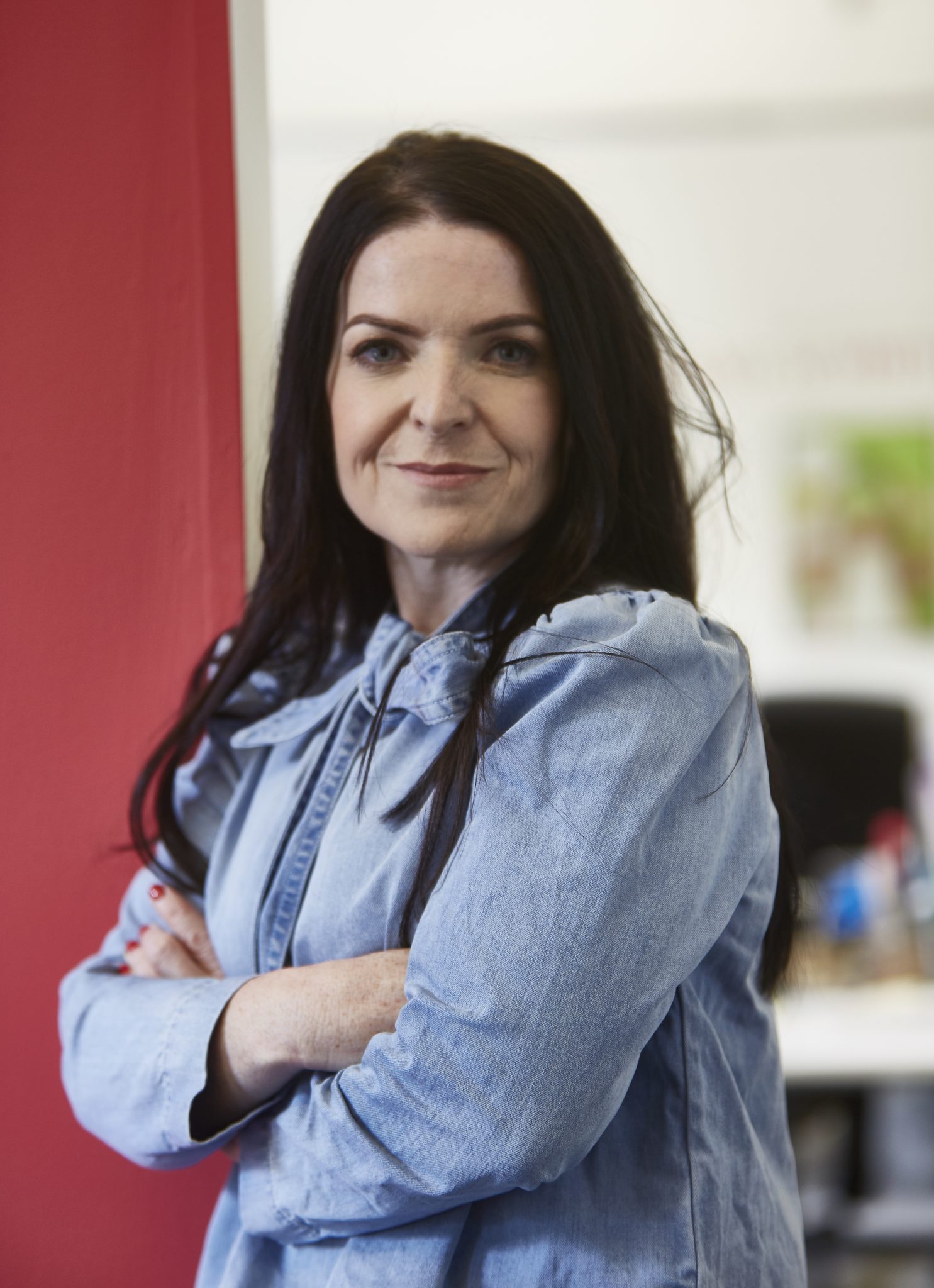
In this episode
- How Annabelle spotted a gap for luxury lingerie for women of colour
- Ihuoma’s mission to say every woman deserves luxury
- Creating unique pieces that feel like works of art
From Art Curator to Lingerie Founder of Luxury Brand Ihouma
On this episode of Start Scale Succeed, Nicole Higgins, The Buyer and Retail Coach, talks about luxury lingerie brand. As a result, you will come away with practical tips for your own product business. So, press play above or read on for the key points.
This week Nicole is joined by Annabelle Mazu, the founder of Luxurious lingerie brand Ihuoma. Ihuoma celebrates the beauty of women of colour, with exquisite, sensuous lingerie with the aim to enrich, empower, and be bold about your sensuality and the possibilities that arise from living your true self, unapologetically! Find out the challenges Annabelle faced and what advice she would give an aspiring entrepreneur.
KEY TAKEAWAYS
We chat about luxury lingerie brand
Annabelle found that the lingerie brands that were aimed at women of colour were in the mid and lower price ranges. She saw this gap in the market and decided to start Ihuoma. She felt that black women are typically shown that they’re not deserving of luxury, Annabelle wanted to say the exact opposite with her brand.
Annabelle wanted to create unique pieces that are considered works of art. She didn’t want something that seems generic, she wanted the people who wear Ihuoma to feel like goddesses.
Ihuoma launched during the pandemic, which might have actually been a bonus with people wanting something nice and unique for themselves after having a pretty rubbish time stuck at home.
Ihuoma had a huge boost when it was featured on Beyonce’s stylist’s blog. They went from 400 followers to 2400 overnight.
The biggest challenge Annabelle faced was self belief, believing that she could do it and believing that someone else would look at the brand and say yes I think this can succeed.
Annabelle couldn’t have started up without a Virgin Startup Loan, which she is very thankful for as she found it next to impossible to get a loan from a bank.
BEST MOMENTS
“I was working with all these great brands and realised there was something missing”
“This is going to launch when it’s meant to launch”
“You have to deal with imposter syndrome on a day to day basis”
VALUABLE RESOURCES
www.thebuyerandretailcoach.com
www.instagram.com/thebuyerandretailcoach
ABOUT THE GUEST
IHUOMA is a luxury lingerie brand that celebrates the beauty of the modern Black Woman. The aim is to enrich and empower women of colour to find their divine femininity, be bold about their sensuality and the possibilities that arise from living their true self, unapologetically!
The collections explore themes of self-love, empowerment and sensuality with the ultimate desire to show women how incredible they are in their skin by complimenting and enhancing the inherent beauty of all black women. Created by a black woman, IHUOMA, at its core, is a luxury brand aimed at Black Women, but not exclusive to her. The collections are for all women, wanting to connect to their spirit, their divine feminine
ABOUT THE HOST
Buying & retail expert Nicole Higgins spent the last 18 years working for companies such as Primark, M&S, Debenhams and Asda, sourcing & developing products from all over the world, building strategies for blue chip businesses, and increasing bottom line sales and profit, adding over £40 million in incremental business to the bottom line.
Nicole now uses that experience and works as a consultant and coach for entrepreneurs and small to medium sized business owners, helping them start and scale their product businesses as The Buyer And Retail Coach (TM)
More from episode 37
Join the Start Scale Succeed waitlist. How to start & scale a product business. A 12 Week programme: thebuyerandretailcoach.com/startscalesucceedwaitlist
CONTACT METHOD
Website https://www.thebuyerandretailcoach.com
IG https://www.instagram.com/thebuyerandretailcoach/
LinkedIn linkedin.com/in/nicolehigginsuk
Email nicole@thebuyerandretailcoach.com
Newsletter https://thebuyerandretailcoach.com/newsletter-sign-up/
Book a call with me https://thebuyerandretailcoachltd.as.me/discoverycall
Host Nicole Higgins
Nicole has worked as a buyer and head of buying for over 18 years for retailers such as Primark, M&S and Debenhams and now uses her expertise and knowledge to help entrepreneurs start and scale their product businesses and continues to work on projects with corporates to increase bottom line sales and profits.
She established her own business The Buyer And Retail Coach™ to help give entrepreneurs the confidence and knowledge to bring products to market. Her expertise covers many areas from product development to sourcing and strategy across multi-product categories
The Buyer and retail coach
Nicole Higgins Links
https://www.instagram.com/thebuyerandretailcoach
https://www.linkedin.com/in/nicolehigginsuk
https://thebuyerandretailcoach.com
https://thebuyerandretailcoach.com/newsletter-sign-up
https://thebuyerandretailcoach.com/free-discovery-call
https://thebuyerandretailcoach.com/blog
Find more episodes on the Start Scale Succeed podcast page.
Read the full episode transcript
Welcome to the Start Scale Succeed podcast, with me your host Nicole Higgins, the buyer and retail coach, sharing tips, advice and insight from entrepreneurs that have just launched to multi-million pound business owners. We will be discussing the challenges they faced, advice they would give, and the milestones they achieved and how they got there. Also joining me will be a broad range of experts with some tips and practical how-tos, episodes that will help your business grow and to enable you to live the life you crave. The types of experts that you’ll hear from will be those that you will find beneficial as you start and scale your business, from branding and social media experts to mindset coaches and PR marketing. There will also be solo episodes from me discussing a variety of topics, from sourcing to maximising the profit in your business.
Today I’m joined by Annabel Mwazu, the founder of luxurious lingerie brand Eoma, which celebrates the beauty of women of colour with exquisite, bold and sensuous lingerie. Thank you very much for joining me today, Annabel. Hello, hi Nicole, thank you for having me. You literally just took away my first bit. Well, don’t worry, I’m going to ask you, I’m going to go straight into it and ask you as a brand, and we’re going to talk about your background, we’re going to talk about your journey, but to give people a sense of what Eoma is, because it’s more than just a lingerie brand, as a brand, what does Eoma stand for?
Well, Eoma is actually my name, and essentially Eoma means fortune, somebody who’s favoured, and initially the name of the brand is going to be my English name, Annabel Mwazu Intimates, and then, you know, it was my daughter and also the marketing team that I was talking to who just felt, no, we needed to change it up, and it was my daughter who suggested that I use my American name, so Eoma means that, and it actually works perfectly with what the brand is about, you know, I really wanted to create a collection of lingerie that I didn’t see out there for myself, luxury lingerie pieces that actually spoke to women of colour, not just in terms of sizing, but in terms of aesthetic, in terms of the fabrics that was used, in terms of the designs that we use, design ideas that we use that would elevate women, that would elevate the black woman in particular, because it spoke to them on a cultural level. So, I mean, I’m a black woman, obviously, and I just felt that there was just nothing in the market on the luxurious end that kind of, you know, that did that. I kind of saw a few brands that were coming up, great brands that were coming up, that were focused on women of colour, but they tended to be on the mid to the lower price point, and I kind of wanted to, couldn’t understand why that was, especially coming from a background of luxury lingerie, and I felt that there was a niche in the market to actually address that issue. So, yeah, it really is about self love, about sensuality, about empowerment. That word is overused a lot at the moment.
But that’s really what Iheoma is about. It is about a woman feeling incredible in her skin, particularly black women, because we’re just not taught that we are deserving of luxury. And so, I just really wanted to actually showcase black women. But then it’s wonderful because in doing so, it’s kind of translated to all women. I would say 50% of my market is women that are not black or from different ethnic backgrounds, which is amazing, especially because I was scared about kind of showcasing that it was for black women, but I’ve decided I’m going to be unapologetic about it.
And so far, it’s actually been good. So, yeah. And I really like the way your brand tells its story through the embroidery and the pieces that you have. We’ll come to that in a minute because I want to understand more about your design process and how you came to that. But share with me a little bit about your background.
Yes. So, originally, of course, many things, many hats to my, I wear many hats, but I was originally a curator. I worked in the arts for about 15 years, 15, 18 years. I worked in the arts promoting African and Caribbean, particularly African artists. And I worked with various institutions here in the UK, in Lagos, in Ghana, in Dubai.
And yeah, I absolutely loved it. So very much on the art background. I always called myself a frustrated artist because, you know, spending time with all these amazing artists, but I didn’t personally have the opportunity to put across my own creative zeal, you know, in designs or art, you know, in painting or whatever. So that’s essentially my background. But I decided to take a break from the arts in after my biggest show, which took place in Dubai, actually.
And I took over about 22 artists to Dubai over four months. And it drained me. It drained me on so many levels. And it was my first proper commercial adventure. And I realised that this was not what I was passionate about.
I was passionate about promoting the artists as opposed to giving them a platform to showcase their work as opposed to trying to sell their work. And the artwork was pretty cutthroat. So and when I did it, now we see loads of galleries promoting black artists and African artists. But at that time, there wasn’t hardly any. So I like to think that I was pioneering in that sense.
But I just realised that I just needed to do something different because I, you know, I wasn’t getting, I wasn’t feeling passionate about it anymore. So I decided to explore my other passion, which, you know, funnily enough was lingerie, it was fashion, in particular lingerie. And I set up an online platform called Beautifully Undressed, which was really just an opportunity for me to just kind of like indulge in meeting all these amazing designers, really not realising in any way, shape or form what it took to actually create these incredible pieces that make women feel so powerful. So yes, I set up Beautifully Undressed at the end of 2013, 2014. And yeah, as a result of just spending so much time working, you know, with these great brands, in the midst of it, I realised that there was something missing, especially going to trade shows and just not seeing people like myself on the floor as buyers, but also as customers, or as a brand, exactly.
And particularly because I was on the luxury end, as opposed to the mid-range or the, you know, fast fashion end, there was literally nothing. So that’s really why and how Ehoma came about was to try to address that issue and to try and provide lingerie for women of colour that was luxurious, that, you know, working with beautiful fabrics, that was well-made, tailored to fit and all of that. Yeah, so that was, yeah, that was my background. You can really see your art background that’s come through into your, the lingerie business, because they are pieces of art. Those embroideries are pieces of art, essentially, and they tell a story.
Yeah, I’m glad. I’m really, really glad that you see that because, I mean, I’ve still got illustrations and videos of myself and my daughter, because my daughter is very much part of this. And there’s the inspiration, really, behind Ehoma. But I have videos of us sitting down, doing diagrams, you know, going through books and just trying to get inspiration and talking through ideas. And certainly with Divine Feminine, which is the first embroidery that I designed, I look back at that first illustration to actually seeing it as a piece of beautiful fabric and a piece of beautiful fabric that everybody loves.
It’s so, so powerful for me. And especially because we kind of veer away from the traditional idea of what embroidery should look like, you know, the florals and things like that. So explain, because you’ve used symbols from… Yeah, yeah. Explain a little bit about some of the symbols you’ve used and what they represent, because I think that’s really, I think it’s greatly great to understand the story that you’ve woven into the pieces, you know.
Yeah, yeah. So it was important for me to develop the embroidery around the darker new tone for obvious reasons. And I decided to work with a fantastic embroidery company, French embroidery company, who were able to find the deep tonal, nude French twill that we could use to embroider, we could use basically as a base. And for me, the major symbol in this particular embroidery is the ankh, the Egyptian ankh, which I don’t know if you know about it, but it’s very much a symbol that is very, very strong in black culture, in Egyptian culture, obviously, but also in black culture, in the sense that, you know, it was before the Christians came to Egypt. In fact, the Christianity, the cross that we know is developed around the symbol of the ankh.
So it has a very, very powerful symbolism in the sense that it evokes vivaciousness, the energy between masculine and feminine. And it is really about life. You know, the top of it is the, you know, is the female vulva and then the bottom is the male phallic symbol. So it really was about embodying, in creating something that spoke about the importance of the genesis of life and which is very much something that throughout all African cultures is very, very powerful. The women are, you know, what we do as women, you know, to bring in another being into this earth is incredibly powerful.
So it’s about celebrating that. And so, and I’m also going down quite a spiritual path. And so the symbols also include an interpretation of the moon, an interpretation of the sun. And so it was very, very different to what’s kind of out there. I remember the embroidery company that we were working with saying that, you know, they hadn’t done a design like this before, which I was a bit worried about because I was thinking, how would it translate?
But I didn’t even worry about that because it translates to everybody. So, so yeah, and that’s how we’re going to work with all my embroidery. I’m working on a new embroidery at the moment, or we’ve finished our new embroidery. And again, it’s around, you know, it’s very much as an ode to African women and ode to Africa as a centre of the world. And so, so yeah, it’s, it’s, it’s that’s what that’s the aim was to is to be able to create unique pieces.
Like you said, works of art, I don’t want pieces that seem generic. I want a woman who’s going to spend whatever they’re going to spend on a piece to really feel every time that they wear something, one of our pieces that they are just utter goddesses. And that’s the whole point of it is to make women, because we are, we’re just incredible. So, and if we don’t shout it, then, you know, who else is going to? Yeah, exactly.
When did you actually launch Eoma? OK, so Eoma was launched at the end of October, the beginning of November 2020, so the height of the pandemic. The plan was actually to try and launch in 2019. I’ve been working on this since 2017. So the plan was to try and launch in 2019, but the journey, as I explained to you, has been very, very challenging on many, many levels.
And once I kind of let go of trying to have control about timelines and things like that, I just. I just thought, OK, this is going to launch when it’s meant to launch. And it just so happened that it was in the middle of a pandemic, a crazy time to launch. But at the same time, it’s probably a very good time to launch as well, because, you know, I think everybody was just so exhausted at that point and actually seeing something beautiful and pretty was kind of uplifting for many people. So, so, yeah, we launched at the end of October 2020.
We’re kind of also kind of pushed into it because we were we were we were showcased on Black Owned Everything, which is Beyonce’s Stylists platform. And I’ll never forget because my daughter and I were in Ibiza and my phone, I’ve never heard my phone go off before. And literally from having, you know, probably 400 followers one day to have been nearly two thousand four hundred the next day, I was like, what the hell is going on? And everybody’s saying, you know, who are you? Where are you?
Where did you get our hands on this? What is this? You know, where can we find this? I’m like, oh, my goodness. So we had to ramp thing.
We had to ramp things up pretty quickly. And yeah, so basically it was the end of October. Thanks to these amazing women that I found in Mansfield that we were able to start on a made to order basis. And it’s up to this point has worked very well for us. I think people just appreciate that they’re buying something that is unique and special and somebody has spent time to create it.
And, you know, it’s not just a generic piece that is, you know, in a factory. It’s been made specifically for them. And especially if it’s something that’s focused on for black women, because that’s never the case. You know, so. But yeah, yeah.
What do you think? I know that there would have been a lot of and we talked about it before we started recording. You know, it is a roller coaster creating your own brand and setting up your own business. What do you think have been the specific challenges for you and how you’ve overcome them? The specific challenge for me is just for specific is just believing in self and believing in your idea that the idea has legs and that somebody somewhere will will see it and will want to to go with it with you.
That’s been some that’s been a personal challenge. And I think that’s probably one that most creatives probably go through. You know, you’re it’s it’s you become a bit vulnerable because it’s your idea that you’re putting out there and you’re asking people to believe in what you’re doing and to not only believe, but to spend this is luxurious, you know, a significant amount of money on purchasing it. So and because it’s a personal piece as well, lingerie is so personal. It really, really is.
I think so anyway, it’s the one item that’s closest to your body. So, you know, for me, I believe that that should be the one thing that should be the most beautiful. So that’s been a challenge, which, you know, is on a day level, like it’s called imposter syndrome, isn’t it? You try and deal with imposter syndrome on a day to day level on a practical level. It’s been about just funding, raising the investment or the funds to to to even get to this point.
And it’s an ongoing situation for us to have even gotten to this stage. I managed to get as, you know, that’s how we met a virgin startup loan. And I have to be, you know, Virgin have been really, really supportive. I really couldn’t have even started the process of development without that loan because I you go in with an idea, feeling excited about everything. And one of my mottoes is don’t worry about the how, but intrinsically, you are worrying about, OK, this is an idea concept.
How do I get to this point? And invariably, everything needs funding for somehow and the normal routes of funding were just not available, even with a business. I was being shut down all the time. And as I said, thankfully, I got the the loan from Virgin Startup, but it literally was just for development. It wasn’t for production in any way, shape or form.
And can I just ask you in terms of why do you think that you were being shut down from the traditional funding? Was it things that they were asking that you didn’t have available or? I mean, I’d like to think that I had all the information that they required on a personal level for the couple of people that I spoke to, and especially just doing research, the probability as a black person of getting funding from a bank as a small business is next to zero. It really, really is. And that’s why I’ll always champion, for example, Virgin Startup for actually believing in the concept.
And the Virgin Startup process, I thought would probably be a couple of months. It literally was nine months of just trying to deal, answer the questions, making sure that… Before you got the funding and… Yeah, before I got the funding. So, you know, I envy people who are able to go into a bank and, you know, and I gave them all the figures.
I gave all the banks everything, but they were just not, you know, there was, they just, it was not something that they were wanting to invest in. That’s my personal experience. I don’t know how it is for anybody else. And so, yeah, in terms of, and that was one of the main reasons why I’ve had to start on a made-to-order basis, because obviously I am not, there’s not an initial requirement, you know, in terms, like, for example, with production of actually having a big outlay of to invest straight away. And for me, it allows me as a small, to start small, basically, and to gauge also in terms of what pieces sell better than others.
And to start relatively lean, like you say, you know, you would have had a big, you know, investment in terms of the designs, the embroidery, at least you’re not holding on to, and I know things may change as you grow, but you’re not holding onto a lot of stock and it allows you to change. Absolutely. And a lot of, certainly in the lingerie industry, the minimums are ridiculous. And I really do wonder how people hold stock, but then I guess then if you’re established, then obviously that, that, you know, you have a basis, you have the funding, et cetera. But as a new brand, unless you’re making it yourself, is another option.
But even then I just think when I think about thinking about the lovely women that I work with, you know, their workload is unbelievable. So, you know, it does mean that you can start lean. And thankfully there was that option. And, but as you said, we are now having to transition out of that because we’re having customers who, you know, I’m really, I’ve been lucky to this point whereby the customers have been happy to wait, you know, the time that it takes to produce. But there are customers that I’m losing out of who want it, you know, not necessarily tomorrow, but at least within a week, do you understand?
And our, our main order right now is up to four weeks. So because I’m having to slot in where, you know, whenever I can. But it’s, but it’s fine. It hasn’t deterred anybody so far. But, you know, I would like to open up and in order to grow the business, I will have to look at production for sure.
And so in terms of self belief in the funding, what are the challenges you think that that you faced over your journey? Oh, gosh, how do you put that? I mean, the challenges are ongoing. And as I said to you, it is a very much a rollercoaster. But you have to just have belief in what you’re doing.
And I think ultimately I literally have to talk to myself every day and say, OK, we’ve got to deal with this now. And they’ve said there’s an issue with the fabric. And for example, there’s a delay right now with my new collection. But it’s out of my hands. I can’t do anything about it.
But at the same time, I also realize that as much as I would want my pieces to be pieces that and this particular collection will be a continuity collection, I want it to be there. It’s I think is iconic. But fashion is fashion and people want something new. And obviously that impacts on sales and everything else. So you’re having to try and find ways of trying to grapple with that, whether it’s in how you market it, whether it’s in doing competitions, whether it’s in doing collaborations so that, you know, people can see that, you know, for me, I don’t even understand why lingerie has to go into seasons.
I just think that, you know, and so I kind of let let it go. I probably won’t work on a season to season basis when the collection is ready, then it will be produced. So it’s about just come to terms and just being OK with that, you know, just that’s the way you’re going to work, you know, so you can keep momentum up in different ways. I know you say, you know, if it’s with with fashion, people are used to new colors dropping or whatever. Yeah, momentum up in different ways, like you say, in terms of collaborations or competitions or influencer marketing.
And absolutely. And what do you feel have been your highlights or your proudest moment so far? Oh, that call when you were in Ibiza must have been amazing. That was definitely one. Um, funnily enough, well, I’m sure you hear this from every founder.
Every founder is when you’ve got the first samples through and then you’re high for about 10 minutes and then you look through everything and then, no, this is wrong. But I still but I still I still hold on to that because for me, just the fact that, as I said, I remember sitting here in my living room with my daughter, just drawing it up and then here is a sample. And OK, it’s not perfect, but it’s a sample. So, you know, it’s about bringing that vision to life. But certainly when my the next set of samples came, oh, my God, that was incredible.
That’s been a highlight. Working with some incredible creatives, I think another major highlight was working with the I call it as far as I’m concerned, is a creative genius. Is A. J. Hamilton or the TOG father?
I dreamt about working with him. And then when he reached out to me, I was like, I literally I screamed for days and I had to I kept on telling my daughter to pinch me, but I had to keep on pinching myself. And then the art that he produced and literally this was just after we’d launched. So we launched in October, November, and the images came out in December. And he hadn’t posted for literally a whole year.
So he relaunched with the incredible you know, montage that he did of our pieces, which was just unbelievable. So that was a highlight. And then the big highlight, which was on my vision board. I was delighted when I could tick it off was when we were showcasing Vogue. We were on Vogue.
com. Yes. Yeah. Yeah. I again, that was like how, where, you know, it was actually because I was following another brand that I have a lot of respect for.
And she posted that she had been on there. And I thought, oh, OK, this is interesting. Not thinking that I’d be on on there in any way, shape or form and went on and there we were listed. And, you know, for them to have said what they said about us creating pieces that were, you know, exquisite designs and and epitome of of of luxuriousness. And one definitely you have it ingrained.
Do you have that every day and every evening, every morning when you wake up and every night before you go to bed? This is what exactly exactly that is definitely been a highlight. And we got some great following as a result of that and some really lovely sales. And and actually more more than that, actually, was my first customer. I just I was like, what?
Somebody’s actually spent and that person didn’t spend a small amount either. It was literally, you know, a thousand something that was spent on my at my first sale. And I remember I was in my jumping place and I was just screaming. So they’ve been so many, so many special, special, special moments that it makes everything else. All the hard work, all the stress, all the struggle.
It just makes it absolutely worthwhile. And that’s why I know that I’m in my calling, you know, I’m finally doing something that is is what I was meant to do. You know, I loved working in the arts, but I always felt somehow that I’m not sure. But this is, yeah, what I’m supposed to be doing. So, yeah, it’s wonderful.
And then when the women kind of like share their pieces, their images, it just blows me away. You know, that they’re willing to and they take such beautiful photographs and just showcasing, you know, the, you know, the designs. I’m literally getting images every month from women who purchase like, you know, their partners have purchased for them. And it’s just lovely, you know, to get such positive feedback. So because that’s the other thing is like, you know, you love it.
But you just think, oh, God, you know, I’m always so scared whenever I pack because I do all the packing myself. Yeah. And I and I I’m fastidious about making sure that it’s an experience. You know, everything is experienced. But in the back of my head, I’m thinking, oh, my God, I hope they fit.
I hope they love it. So when they come back and they say, oh, my gosh, and I had such beautiful letters of thanks, it’s just been wonderful. So, yeah, it makes it all worthwhile. Yeah. And where would you like to see Ioma over the next?
How would you like to see it grow over the next two years? Oh, well, I mean, I definitely like to hear Ioma to be established or seen as the go to luxury lingerie brand for for women of color. I want you to think, you know, to people for people to think, OK, I want to buy something special for my wife or whatever. And, you know, she had she knows she’s a woman of color. I know where to go to.
But I also. I also want us to kind of I think we’ve already done that to a degree to kind of be seen as a brand that is cross cultural and about celebrating women and and focusing on how beautiful women are in their skin. And just again, whether you’re black, white, Asian, whatever, you know, you’ll think about Ioma as some as a brand that makes you feel incredible and empowered and valued and, you know, worthy of of just beauty in your life. That’s what I really would love. In terms of expansion, I’ve got loads of things that I like to go into.
I mean, obviously, swimwear, I mean, it’s definitely on the on the business plan is that we’re going to swimwear as well or resort wear that kind of side of things. and do you want to expand the wholesale side of things more? Yeah, I would. Absolutely. I mean, I think I mentioned to you the dream is to be in Selfridges and Saks Fifth Avenue.
I can really, you know, like I said, I can absolutely see it. Yeah. They’ll be phoning you up like like A. J. Hamilton.
They’ll be phoning you up and asking you to. I mean, I know what I dream about that. You know, I really, really do. And, you know, I I we don’t give ourselves enough credit as women because a man will be cheering themselves on if they’d achieved what they’ve achieved. So but I when I think about what we have achieved in this period of time with next to nothing budgets and with no marketing budget.
Yeah. No advertising. I don’t think I’ve ever written. I haven’t used that to somewhere. But I don’t think I’m not a news that’s a press release somewhere.
But I don’t think I’ve ever sent it to any press. And yet we’ve received such amazing press. I mean, Vogue was a pinnacle. But even yesterday, we got a listed on the lingerie addict, which is the go to lingerie blog blogger. We were listed in their top black black owned lingerie brands to watch, which is for me, just to be highlighted by the by them is fantastic.
But then, you know, we’ve also been, you know, showcased on business insider as well. So it’s been a bit of fashion. You know, it’s a bit of business as well. And, yeah, it’s been it’s been wonderful. So to get that recognition without actually hunting for it.
Yeah, it’s been a miracle. Really, really, really, really has. Well, no, I think it’s testament to the product and to you as a businesswoman and a woman in terms of what you’ve created. It really is. You know, they’re not going to post about it or write about it if they don’t, you know, if it’s not from the heart themselves, if they don’t feel that.
So I think that it’s great. So I can’t wait to see everything that you achieve over the next, you know, couple of months, couple of years. Oh, thank you. And, you know, I have to say thank you for this. You were obviously my mentor for a period of time.
And I think when we started working was when the lockdown actually began. So it was very, very difficult. We weren’t able to meet up or whatever. But you always check in and you’re always cheering me on from the background. So I really do really do appreciate it.
And also thank you for encouraging me to do this, because I hate this. For me, it’s one thing that I’m just so scared of doing. Well, the next thing I need to get you on an Instagram live with me. That’s that’s my god. Oh, my God.
Well, let’s talk about that. Thank you so much for joining me today, Annabelle. And where can if people want to find you, where can they find you? Yes. So, yeah, we’re EHUOMA, which is on our website, which is www.
ehuoma. com. We’re also on Instagram by at by dot Ehuma, Pinterest as well. Just set this Pinterest up as well. Twitter, the same thing by Ehuma and Facebook.
But I’m hardly on Facebook. So but Instagram is the place where you can definitely find me. And of course, our website as well. And I’ll link I’ll put those links in the show notes so people can check those out and see the beautiful lingerie for themselves with their own eyes and hear more about your story there. And if you want to find out more from me, you can find me on at the Byron Retail Coach on Instagram and www.
byronretailcoach. com. I hope you’ve enjoyed this episode. And if you have, I’d love for you to leave a review and you can check back next Thursday when there’ll be a new episode. We release them weekly.
So I will hopefully see you again next week. But thank you very much for joining me, Annabelle. Thank you for having me, Nicole. Thank you so much.
This transcript was generated automatically and may contain small errors.