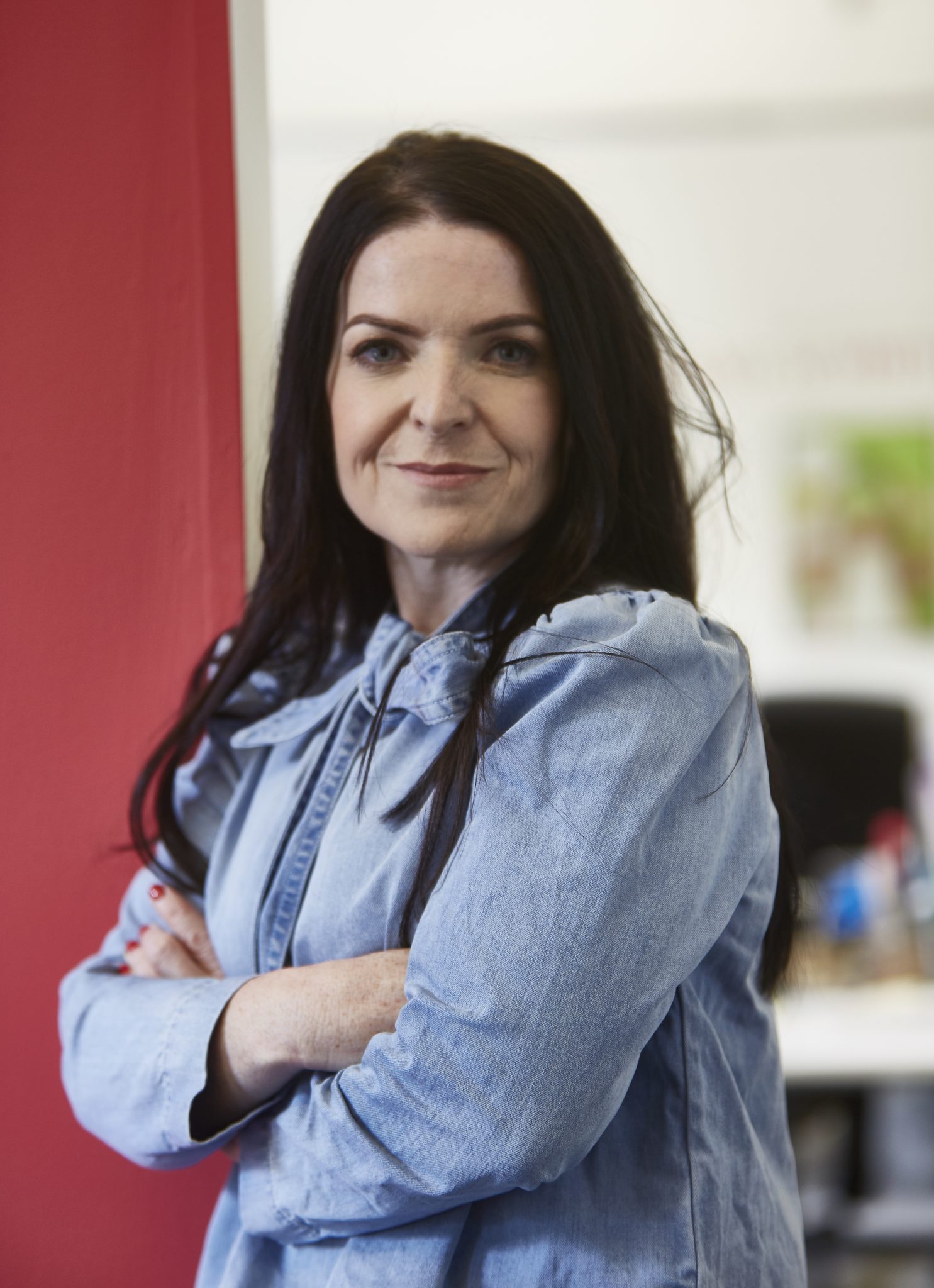
In this episode
- How Fashion Angel supports fashion start-ups with mentoring, events and funding
- The fashion industry is less glamorous than many expect
- Pair creativity with business skills to build a sustainable fashion brand
What You Should Do When Starting a Fashion Brand with Alison Lewy MBE of Fashion Angel
On this episode of Start Scale Succeed, Nicole Higgins, The Buyer and Retail Coach, talks about starting a fashion brand. As a result, you will come away with practical tips for your own product business. So, press play above or read on for the key points.
Have you wondered about what the costs are involved in starting a fashion business or what you should be doing first? Today on Start Scale Succeed Nicole is chatting with Alison Lewy MBE, founder of Fashion Angel, mentor, consultant, and author of “Design Create Sell – a guide to starting and running a successful fashion business”.
KEY TAKEAWAYS
We chat about starting a fashion brand
Fashion Angel is a fashion industry support service offering business mentoring, events and access to funding, to fashion start-ups and established fashion business entrepreneurs. Their mission is to give fashion designers and entrepreneurs the tools to enable them to connect their creativity with the entrepreneurial skills they need, to start up and grow sustainable fashion businesses.
A lot of people come into fashion thinking it’s quite a sexy, glamorous industry and they don’t realise what goes on behind the scenes and that you need quite deep pockets to make it work.
Things don’t happen by accident, so you need to have a really clear purpose for what you are trying to do. A strong, unique selling point for what, whatever your brand is and you need to research the market and understand where your brand is going to sit amongst your competitors.
A business plan doesn’t need to be war and peace, but there are certain key sections that you would always be thinking about. What is the unique selling point of what you’re trying to do? What is the purpose of it? Can you explain it in a couple of sentences because you’ve got to get your message over really quickly.
For a fashion brand, the biggest cost to start with will be your sampling development, to create your new styles, patterns, and prototypes that can be very costly. What is your budget for your initial stock?
When it comes to sustainability, you often have amazing ideas and you’ve got a particular idea of how you want to do something. But then when you try and source that sustainably, that can be challenging.
BEST MOMENTS
“I realised that there was some amazing talent out there and lots of people with great ideas, but there was a big gap between the creative bit and the business side”
“So many brands we come across just literally run out of money before they really get anywhere because they haven’t done the planning”
“People don’t buy products, they buy stories behind brands”
“Product and marketing costs are the two biggest ones”
EPISODE RESOURCES
ABOUT THE GUEST
Alison Lewy is a social entrepreneur and founder of Fashion Angel. Alison ran her own design and manufacturing business for 15 years producing under her own label as well as consulting on sourcing and production for designers including Matthew Williamson and Preen.
Alison became the Commercial Director of the Fashion and Textile Museum in 2006 which she positioned as a hub for the fashion and textile sector, and continued to run mentoring and business support programmes as part of the museum’s offer, as well as setting up the Shop@FTM to showcase new designers.
In 2016 Alison was awarded an MBE for founding Fashion Angel and in recognition of her services to the fashion industry. She is also the best-selling author of Design Create Sell – a guide to starting and running a successful fashion business.
ABOUT THE HOST
Buying & retail expert Nicole Higgins spent the last 18 years working for companies such as Primark, M&S, Debenhams and Asda, sourcing & developing products from all over the world, building strategies for blue chip businesses, and increasing bottom line sales and profit, adding over £40 million in incremental business to the bottom line.
More from episode 79
Nicole now uses that experience and works as a consultant and coach for entrepreneurs and small to medium sized business owners, helping them start and scale their product businesses as The Buyer And Retail Coach (TM)
Join the Start Scale Succeed waitlist. How to start & scale a product business. A 12 Week programme: thebuyerandretailcoach.com/startscalesucceedwaitlist
CONTACT METHOD
Website https://www.thebuyerandretailcoach.com
IG https://www.instagram.com/thebuyerandretailcoach/
TikTok www.tiktok.com/@thebuyerandretailcoach
LinkedIn linkedin.com/in/nicolehigginsuk
Email nicole@thebuyerandretailcoach.com
Newsletter https://thebuyerandretailcoach.com/newsletter-sign-up/
Book a call with me https://thebuyerandretailcoachltd.as.me/discoverycall
Host Nicole Higgins
Nicole has worked as a buyer and head of buying for over 18 years for retailers such as Primark, M&S and Debenhams and now uses her expertise and knowledge to help entrepreneurs start and scale their product businesses and continues to work on projects with corporates to increase bottom line sales and profits.
She established her own business The Buyer And Retail Coach™ to help give entrepreneurs the confidence and knowledge to bring products to market. Her expertise covers many areas from product development to sourcing and strategy across multi-product categories
The Buyer and retail coach
Nicole Higgins Links
https://www.instagram.com/thebuyerandretailcoach
https://www.linkedin.com/in/nicolehigginsuk
https://thebuyerandretailcoach.com
https://thebuyerandretailcoach.com/newsletter-sign-up
https://thebuyerandretailcoach.com/free-discovery-call
https://thebuyerandretailcoach.com/blog
Find more episodes on the Start Scale Succeed podcast page.
Read the full episode transcript
Welcome to the Start Scale Succeed podcast with me, your host Nicole Higgins, the buyer and retail coach, sharing tips, advice and insight from entrepreneurs that have just launched to multi-million pound business owners. We will be discussing the challenges they faced, advice they would give and the milestones they achieved and how they got there. Also joining me will be a broad range of experts with some tips and practical how-tos, episodes that will help your business grow and to enable you to live the life you crave. The types of experts that you’ll hear from will be those that you will find beneficial as you start and scale your business from branding and social media experts to mindset coaches and PR marketing. There will also be solo episodes from me discussing a variety of topics from sourcing to maximising the profit in your business.
Have you wondered about what the costs are involved in starting a fashion business? What you should be doing first? Today I am chatting with Alison Louie, MBE founder of Fashion Angel, mentor, consultant and author. And we are going to be covering a lot of things involved around that. Thank you very much Alison for joining me today on Start Scale Succeed.
Thank you for inviting me. Very interesting. We just started having a conversation before we were recording about rising costs and those people, how businesses are going to survive over the next couple of months. But before we get into that, can you give a little bit of background about what you do and your business? Sure.
Well, I’ve always worked in the fashion industry one way or another, but for many years I had my own brand and I was a consultant for a lot of luxury brands as well. So I was involved in all aspects from design, manufacture, wholesale, retail and everything in between. And I was doing that merrily away. And then I started doing some consultancy work with a further education college and they wanted to overhaul their curriculum for the fashion industry and making sure that it was fit for purpose. So whilst I was doing that for them, they ended up buying the fashion and textile museum.
So they asked if I would get involved with that and start to sort of reposition it and think about where it would sit within the sector as well as of being a visitor attraction. And what started off as a bit of a consultancy ended up me running the museum for six years, which took me in a completely different direction. But it was very, very interesting. And for a while I was running my own brand at the same time, but at some point it was just too much. So I had to sort of make a choice and I found it very interesting.
What we were doing at the museum and trying to achieve, I sort of ended up being parachuted in and ended up running the museum for six years. And whilst I was doing that, I opened up a retail store within the museum and the idea was to showcase new emerging designer work. And that’s when I really realised that there was some amazing talent out there and lots of people with great ideas. But there was a big gap between the creative bit and the business side. And a lot of these brands were falling down that gap.
So through the museum, we started to develop some programmes to try and plug that gap, which was a mixture of one to one mentoring and group activity. And they were very successful, but they were funded by a programme that sort of came to its end. And I found that I had really enjoyed offering that business support to to these sort of inspiring entrepreneurs, because I’d been through so much myself when I had so much experience and I could share that and help them sort of navigate some of the things and avoid some of the very expensive mistakes that can happen. So we’d built this huge community of people that wanted to support, but the funding wasn’t there to continue with it. So we decided as a legacy, one of the programmes I would leave and set up Fashion Angel as a separate business with the idea of it being sort of a one stop shop for anyone starting or trying to grow a fashion business and that myself and all the team around me would all be from the industry.
So not professional business advisors, but people that have been there, seen and done it. And so I set that up about just over 10 years ago. And we offer sort of one to one business mentoring and lots of group workshops and events and opportunities for entrepreneurs to network as well. And then about a year sort of down the line, I was approached by the Startup Loan Scheme to to get involved with that programme because they were receiving lots of applications from fashion entrepreneurs, but they couldn’t make sense of the business plans at all, because to anyone else, it looks all a bit bizarre. Yeah.
So they asked if we’d be a specialist for the fashion sector, which we did. And we’ve been doing, you know, for the last sort of nine years approving loans. And with that comes business support and helping people develop their business strategy. And that led us to being asked also by the Home Office if we’d be an endorsing body for the visa route that overseas entrepreneurs have to take if they want to come to the UK and set up a business. And it’s a similar sort of work.
It’s making sure they’ve got a robust business plan in place and that they’re in a position and have the right skills and capabilities to take the business forward. We’ve been doing that since June 2020. So really, it’s all about helping businesses with their strategies and making sure, you know, they put themselves in the best chance of being successful. In your experience from what you’ve seen from a lot of the designers and brands that want to start, what have been the common mistakes or the pitfalls that they’ve fallen into? I think a lot of people come into it thinking it’s quite a sexy, glamorous industry and they don’t really realise what goes on behind and that you need quite deep pockets in a lot of cases to make it work.
And you have to plan. Things don’t happen by accident. You need to have a really clear purpose for what you’re trying to do, a strong, unique selling point for whatever your brand is. And you need to sort of research the market and understand where your brand is going to sit amongst your competitors and put a plan together exactly how you’re going to do it and then understand how much it’s going to cost to do it. Because so many brands we come across just literally run out of money before they really get anywhere because they haven’t really figured it out in the first place what they were going to need to start and keep going for a while.
And I was looking at your book before we started chatting and the which remind me of the name. Sign, create, sell. Sign, create, sell, which is a very good guide for people that want to start their own brand and develop a business. And there’s an area talk about business plans and how what’s your advice with that? Where would you say what do people need to include?
In the business plan, I mean, if it’s just for yourself, which it usually is to start with, it doesn’t need to be war and peace. But there are certain key sections that you would always be thinking about. I think the first thing is, is, you know, what is the unique selling point of what you’re trying to do? What is the purpose of it and really trying to define that and sort of explain it in a couple of sentences, because you’ve got to get your message over really quickly. And now people don’t buy products, they buy stories behind brands.
So really thinking about that whole side of it. But then the first sort of main bit of work is do your market research, understand who your competitors are and where your product is going to sit. Profile your target customers, because it doesn’t matter what you’re selling. You have to know who you’re selling to and what’s going to make them want your product. And then obviously the operational side and particularly in the fashion industry, the actual manufacturing and sourcing is actually, I think, the most difficult part of it.
So thinking about how and where you’re going to get your product made and what’s that going to cost. And then are you going to be able to sell it at a price point that your customers can afford and be able to give you some profit as well. And then working out your marketing strategy, because you could have the most amazing product in the world, but if nobody knows about it, it’s not going to get you very far. So really thinking about what that might entail, what your model is, are you business to business, are you selling to retail shops to sell on your behalf, or are you going to be selling direct to the consumer online or through pop-up shops or both? But how are you actually going to manage that?
And then once you’ve done the sort of the narrative of the business plan, it’s then putting into some financial forecasts, understanding what your startup costs are going to be and your ongoing costs, putting together a cash flow, profit and loss, all the boring things that people hate, but they are absolutely essential because you have to have control of the budget and your finances so that when you go into it, you understand what you’re going to need and when you’re going to need it. And then you could think about how you get the funds to do it. You need to know what you need, what you need in the first place. And from a cash flow and a startup cost point of view, can and I know this will vary. You can spend, you know, you can spend hundreds, you can spend thousands, you can spend hundreds of thousands depending on, you know, the type of brand you are and whether you’re a high end mass market or, you know, whatever it might be.
But could you break down some of the costs involved in starting a fashion brand? Well, for a fashion brand, the sort of biggest cost to start with will be your sampling development, you know, to kind of create your new styles, patterns, prototypes. That could be very costly. And it does depend on what you can and can’t do yourself and how much you have to outsource. But, you know, for a fashion item, a jacket or something like this, you’ve got a budget between five hundred and a thousand pounds for each new style, if you’re outsourcing at all.
Yeah. So that’s your biggest cost. So people come and say, oh, I want to have 20, 20 shapes. Well, you know, have you got that kind of money to develop that sort of product? Then I would say it’s if you’re a direct to consumer business, you’re going to have to make up some stock.
You might be working with a manufacturer that has a minimum order. So you need to understand that. So, you know, how much budget would you need for your initial stock? There’s other costs in terms of sort of branding. Branding is very important.
Fantastic imagery and very important. More important than the actual website itself, actually, is the imagery that goes on to your website, because that’s going to attract interest if you’re an online brand. And then there’s bits and pieces like trademarking, things like that. But really, it’s the product and then the marketing costs are the two biggest cost centers, really. And you mentioned there about people thinking about, oh, I want to do 20 styles and I want to, you know, I want to do 20, you know, however many styles in three quarters each.
And it’s just really about that initial stage proving that it works rather than going health leather, I think. You want to test the market, test the market really launch with the minimum amount that you can to get some kind of feedback, you know, it might be a half a dozen shapes and you start try and build a brand in the community and get feedback, get a sense that actually people are liking what you’re doing and are prepared to pay for it before kind of going all in and sort of really going in too deep. Or you might even launch with with one hero product. Plenty of brands start off with one key product. They get known for, you know, you think about Oliver Brown, even the men’s, you know, they start off with men’s very high end swimming trunks or swimming, swimming boxer shorts.
Yeah. And that was the product. Now it’s a full menswear and lifestyle brand. But it starts off as one key product and built up around that. And I think that’s a really good way of doing things, really.
I think sometimes people are under the misconception that they also have it has to be all singing, all dancing this big, big, you know, big kind of fashion range, but it doesn’t. You know, what needs to be singing and dancing is the brand in the marketing. You’re you’re looking bail and that kind of thing. But but like you say, you can start with that one product or that, you know, small range of product to get feedback. Are you seeing more and are you seeing more brands doing preorder when they’re or how what are your thoughts on that?
Yes, I mean, they they they want to do preorder because obviously that’s going to minimise the risk for them. And some some do it with some success. But it’s quite tough when you’re new and not known, when you’re a known brand and you start moving into some preorder. It’s easier because you’ve already cemented your reputation. But as a brand new brand, just saying to people preorder this and no one knows you haven’t you haven’t built up trust.
Yeah, it’s really difficult, which is why I think it’s very important. Even before you start your brand, to think about what does your brand stand for, the core values and start talking about that and building a community around those values so that when you launch, you have already a following and are brought into your your ethos. And then you’re they are going to know you, trust you as a voice and then more likely to preorder if that’s your route or even just buy when you launch. So I think building that that reputation of community is the key to successfully doing preorder really. Are you seeing more people, well, say, like influencers or more people that are known for something else than now get into fashion?
Yes. I mean, it’s a very obvious thing, actually. I think you’ve got the following. So you think, well, I’ve got this following. What can I give that following and maybe make a business out of it?
So either you see influencers setting up their own brand or they might just be doing it under sort of a license and working with an established brand or manufacturer. And it will be more of a collaboration. But they’re leveraging their influence and reach. So it makes perfect sense, really, to do it that way around rather than starting from scratch, if you can. But most people don’t have that sort of following.
So they have to work, work hard at it. The other thing I think everyone has to really think about is consumer behavior and how that’s changed. Certainly sort of through and post-pandemic, because it hasn’t all gone back to normal. Yeah, people are buying less, making more considered purchases for a variety of reasons. And also, they have to take it as sort of the demand for sustainability and transparency, not only from the consumer, who now wants that, really.
Yeah. But legislation wise, this is where we’re moving. I think any new brand has to take that into consideration, which does also mean their costs are going to be higher as well. So they have to factor that all in, because if you’re going to be a sustainable brand, you will be more expensive, probably. Do you think those costs will come down if the demand increases for it in terms of more sustainable fabrics?
Well, if you get scale, yes, they should do. And a lot of these sustainable fabrics are fairly early days and only produced in limited quantities. So, yes, they are high. So I think, yes, when you get a scale, they might come down somewhat. However, raw materials have gone up a lot in cost anyway.
And they don’t tend to go down too much once they go up. Yeah, you might have fluctuations of oil and that’s affecting polyester and things like that. But there’s bits, yes, I mean, they might normalise a little. But what should should happen, though, is more of an access, because at the moment it’s quite hard to get hold of some of the sustainable fabrics because of the limited availability. Whereas when more investment goes into them, then they should be easy to get hold of and you should have more choices as well, because the choices can be limited.
And when you’re a designer, you often have amazing ideas and you’ve got a particular idea of how you want something to look. But then when you try and source that sustainably, that can be challenging. Yeah, and I think as well, knowing, like going back to your point at the beginning, knowing where you want to pitch it, because you may have from a price point of view in your competition, because you may have these grand ideas of you want to do it in the most sustainable way, in the most sustainable fabrics. And but from what you want to pitch it at a price that that’s not going to that doesn’t match up to that, you know, in terms of what’s happening. Yeah, you know, whichever wherever you are, the value end or the luxury end, there is a ceiling to what customs are going to be prepared to pay, what their expectation is.
That was going back to the biggest mistakes. Actually, that is a big mistake people do. They invest a lot in their sampling and development, and then they find out that actually the product is going to end up being too expensive for the markets. And really, they need to be sort of finding that out before they put all their money and their eggs in one basket. And if people where can people go for funding to start a brand in the UK?
Well, a lot of people tap family, friends and fools as a as a as a starting point. But other than that, you know, you’ve got obviously various debt funding options. Yeah, you know, you can go to banks and things like that or get parcel loans for your business, the cost of which is all obviously going up at the moment as interest rates rise. But we, as I mentioned before, we’re a delivery partner for the government startup loan scheme. And I think if you actually do have to borrow money, it is one of the best products because apart from the fact the interest rates, six percent now is quite reasonable.
You get business support with it. But also the loan is not you’re not tied into anything. You can pay off at any time, whereas most loans you have to take for a period of time. And if you exit early, you’ve got penalties to pay or loss of interest. But in this case, it’s a really good news if someone pays or pays off some of their loan.
So you’ve got that flexibility. So if you are perhaps thinking, you know, you’re going to need some sizeable investment, but you need to prove your concept first. It’s a very good bridge, you know, to kind of give yourself some space, start up, get some traction. And then you might well go for actual equity investment from a business angel or something like that. But most angels don’t want you to completely go in new with their money.
They want you to have proved your concept, which means you’ve got to really make that commitment to getting somewhere before they step in with the funds. And there are various platforms that you can go to to look at different funding options. But there’s very, to be honest, there’s very little grant funding. I get calls all the time. Are there any grants around?
There might be some little pockets of money regionally, depending where you live, and then always check council websites and things like that. Sign up to your local enterprise partnership for your region, the LEPs, because if there is any local funding, they will sort of know about it. And if you sign up for their newsletters. But the other option is if you are working the sort of scaling up sustainability, circularity, solving supply chain solutions that make them more sustainable, there are some grant fundings available for that sort of work, either through Innovate UK or there’s other other other pots that come on to on stream now and again. But the focus is really always around sustainability, circularity and finding solutions that are going to reduce the negative impact the industry has on the environment.
And if for a brand that’s established and they want to export, what support is out there? Yes. Well, I mean, I’d certainly sort of get in touch with the Department of International Trade because most of the funding comes through them. It has been reduced, I have to say, the last couple of years, and they seem to be focusing support on for larger businesses. So, yeah, so that’s a bit unfortunate, but they can certainly help you research an area, and it also depends regionally.
They can be pockets of money that come on stream for trade missions and things like this. There’s a UK fashion and textile organisation, UKFT. org, and they they can help you prepare, for instance, if you want to start showing overseas trade shows. They don’t have any funding anymore, but they can help you prepare for the market. And they usually have representatives at the core trade shows to help you ease that process.
And but there’s there’s limited resources at the moment. But I think we would expect more to come on stream, to be honest with you. I think the pandemic and, you know, the war in Ukraine has sort of put a lot of plans on the sidelines because the priorities have changed. But I think export is going to come back as being quite a key priority. So hopefully there’ll be some more support coming coming on stream.
And if you’re listening and you’re not in the UK, so a lot of my listeners would be probably based in Ireland, is your local LEO office would help you with this. And Irish governments seem to be more with there’s a lot more grants available as well for you to, you know, that you can you can access there if you’re a designer and you’re making the products yourself or or if you’re not. And and also for export, there’s more help. I know clients of mine who have had like fifteen thousand or five thousand contributed to to exhibit abroad as well. So definitely check out those local offices and your LEO.
And I think Enterprise Nation is quite a good one as well that will have a list of probably a lot of because there’s Enterprise Nation, Ireland, Enterprise Nation, UK, and they’ll have a list of lots of things in terms of support that you could get there as well. Keep an eye out for competitions, because sometimes it’s just a competition that pops up. I mean, I think there’s one with Enterprise Nation at the moment with Adobe to to pitch and win ten thousand pounds and pitch your idea. And these things come and go. So it’s about reading, being aware and just sort of just not sitting in a bubble, really, just signing up for newsletters to hear, hear things when they come, because they usually come and go quite quickly.
And there can be other sort of support that’s more in kind, like, you know, for instance, TikTok are very keen for people to start using TikTok shops. So they they ran a competition with I think it was American Express. It may have finished now, but they they do that. A lot of the social media platforms run competitions and things, again, because they want to get people on board selling through them. Yeah.
Be aware of those things, because they can be really helpful. And yeah, I think knowing, like you said, Sky did something recently where they funded, I think it was 250 Ks worth of advertising. You needed to be a certain level of brand to to access it or to apply. But, you know, that, you know, I’m sure anyone would take that any day. Someone’s giving you that kind of anything that can help you with any sort of marketing or advertising.
I would grab because it is such a cost to your business. And any help with that is is going to be really valuable. And a lot of people may come to you and be I want to manufacture in the UK or or have that as is they’re one of their main one of the things that they want to do. What are the main advantages and disadvantages of UK manufacture versus Far East? Well, I mean, in an ideal world, I think most people would love to manufacture in the UK if they’re based in the UK.
And of course, you know, if you manufacture in the UK, it’s going to be easier to control because you’re if you’re based in the UK or even if it was, you know, an island, you’re if you’re producing locally and you’re taking this yourself on board the production, then you need to control it. So it makes it much easier. You will find sort of probably quite a lot of high quality manufacturers in the UK. The minimum orders are likely to be lower than overseas. They’re likely to turn around the product quicker, so the lead times will be shorter and you don’t have all those expensive transportation costs.
So there’s a lot of advantages. And also, if you are thinking you’re going to have an export business, the made in UK does add value to your brand in export markets, probably more so to export than domestically. Yes, particularly in the Far East Asia, the US, they love it and they are prepared to pay more for that because we symbolize design and quality. However, even with the best will in the world, sometimes it is just not practical to produce in the UK. You actually sometimes can’t find manufacturers in certain product categories or they’re very limited.
So if you sort of think of things like lingerie or jeans or footwear, you know, there are so few suppliers here that you may be forced to go overseas and so but often it’s a cost thing because labor is expensive in the UK and it’s only going to get more expensive. Let’s face it. And if you have to get your product at the price point, sometimes you have to be pragmatic because you can get it made lower overseas. But you do have to do a proper cost analysis because sometimes you just get a making price from a factory and you think, oh, yeah, this is much cheaper. I’m better off doing this.
But by the time you factor in all the added costs of, you know, when you’re prototyping, courting products backwards and forwards, and then you might have to meet those bigger minimum orders and the shipping costs. And then you’ve got duty potentially to pay VAT on entry. If you really sit down and work it out, sometimes the difference is not that huge. And in which case, I’d always say, take less of a risk, pay a bit more, but try and produce in the UK, certainly at the beginning. Yeah.
But it really depends on what you’re doing. And for some people, they really it’s a choice of doing it or not doing it. On the other hand, some some brands that come to us, it’s an absolute core value for them. They want to make in the UK no matter what. And that’s to do with sustainability and ethical things.
And which is fair enough. But I always say to them, OK, that’s fine. But then you have to realistic. You really have to work out your costs and be sure that you can can sell, really, if you’re going to take that. I think as well, people don’t realise sometimes when you’re starting out, it’s back to your business plan point that they might make a certain profit margin or they might think they might make a certain profit margin.
But then they’ve not actually factored in paying themselves. Or, you know, well, that’s particularly if they make it themselves. That’s the worst thing. People, some of them start off making. They’ve got sort of good technical skills and make themselves.
And then you look at the costing sheets and say, well, where’s your time? Where’s that gone? And they just don’t don’t factor that in, which is, A, not good for them, but B, once they get busy, it won’t be realistic for them to continue to make things themselves. They will have to outsource and they have to budget what they’re going to have to pay a third party. Yeah.
Otherwise, it’s just not going to work, really. And other things like packaging, they forget to cost in, you know, a cool cost for everything you sell is going to be in some sort of packaging. So we try and work them through. We provide templates for costing sheets. So they’ve got a checklist of things to include.
And are they all available through the website as downloads? People have to be working with you to access. Yes. Yeah. They have to be working through us either through startup loans or we might be sort of mentoring them or we have a business club as well.
And if people join the business club, then they get lots of toolkits, which includes lots of templates for all the business plans and all the different financial forecasts and various other things. So, yes, they are available. But people are working with us in some capacity or other. And in terms of trade shows and people exhibiting at trade shows. And I mean, I don’t think it’s something from an investment point of view that people should do straight away when they start out.
I think it just depends on the brand. But what do you think are the best for fashion brands, the best trade shows for people to exhibit at? Well, the important thing is to find the right trade show, because there are a few and you want to feel that your brand and product is going to sit well. So I always say you must visit, whether it’s in the UK or overseas, you must visit the show first to see if it’s really right for you and talk to people about it, talk to other brands, get some feedback. But in the UK, you’ve got Pure, which is one of the biggest ones, which covers most product categories now.
And then they’ve got Scoop as well, which is for more probably have slightly higher end, a lot of international collections, although most of the UK trade shows are actually owned by the same umbrella company now because they’ve all been sort of gobbled up. But there’s one called Just Around the Corner, which is a smaller show, which there’s a Manchester version and a London version. And although small, I believe the quality of buyer is quite good. And it’s actually what they call an ordering show, where actually people sit and do orders, where sometimes as trade shows, buyers are going to wander around and have a look, but they’re not necessarily there to place orders. So I guess those.
But it is really, you know, the specialist shows for lingerie, for bridal wear, depends on your product category, really. Yeah. Pure would probably be the biggest UK one. And of course, then you’ve got all the overseas shows as well. And so how can people work with you if they want to work with Fashion Agent?
So the first thing is to go to our website, which is fashion-angel. co. uk, but we offer the one to one business mentoring. People can sit down just for an odd session to brainstorm or talk about a particular issue or people book a block of time with us where we’re seeing them every four to six weeks, for instance, keeping a project moving forward. And we’re kind of like an outsider looking in your sort of best critical friend, I say, because when you’re working in a business, it’s very hard to see the wood for the trees sometimes.
And you do need some objective input, as you’ll know. If they want to join the business club, there’s different levels that offer a bit different benefits, but that you can join online through the website. We run monthly webinars or workshops. We’ve just started going back to doing in-person workshops at the British Library again. So they’re all on the event page of the website.
And again, you can apply for the startup loan or inquire about the Home Office endorsement or all through the website, really. And then we’d also work on specific projects as well that are more sort of bespoke, designed, depending on what somebody might need from us. Fantastic. Thank you very much, Twyla. I will link all those in the show notes.
And I hope you’ve enjoyed listening today. And I will be back again next week with a great guest. And I would love if you could leave a review for Start Scale 60 so the podcast gets seen by more people, heard by more people and helps more people. Thanks very much, Alison, for joining me today. Thank you very much.
I really enjoyed it.
This transcript was generated automatically and may contain small errors.